
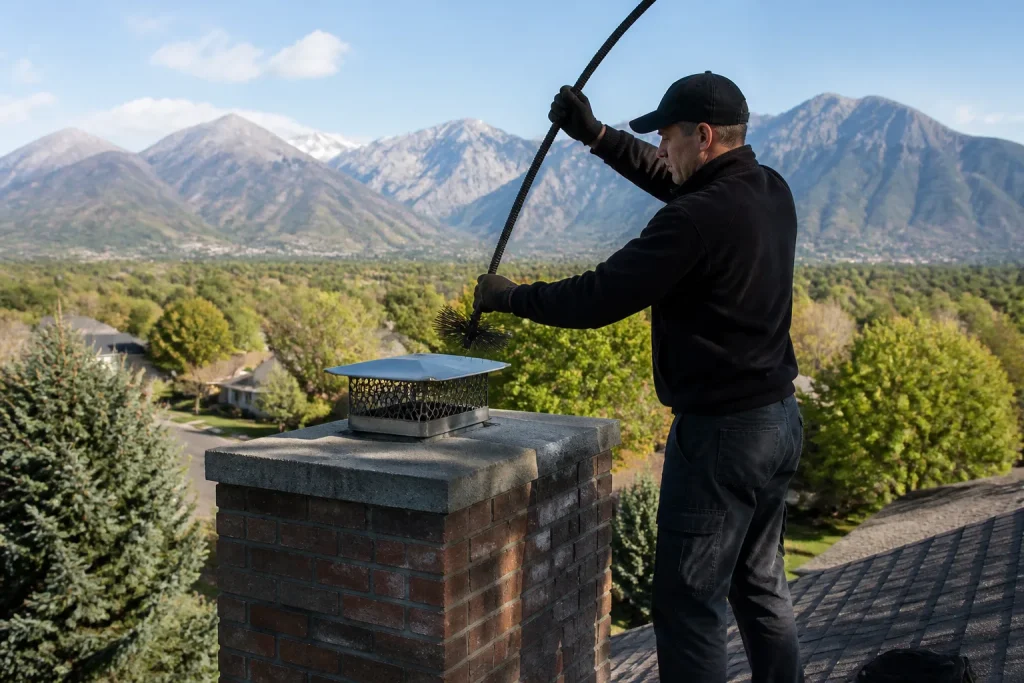
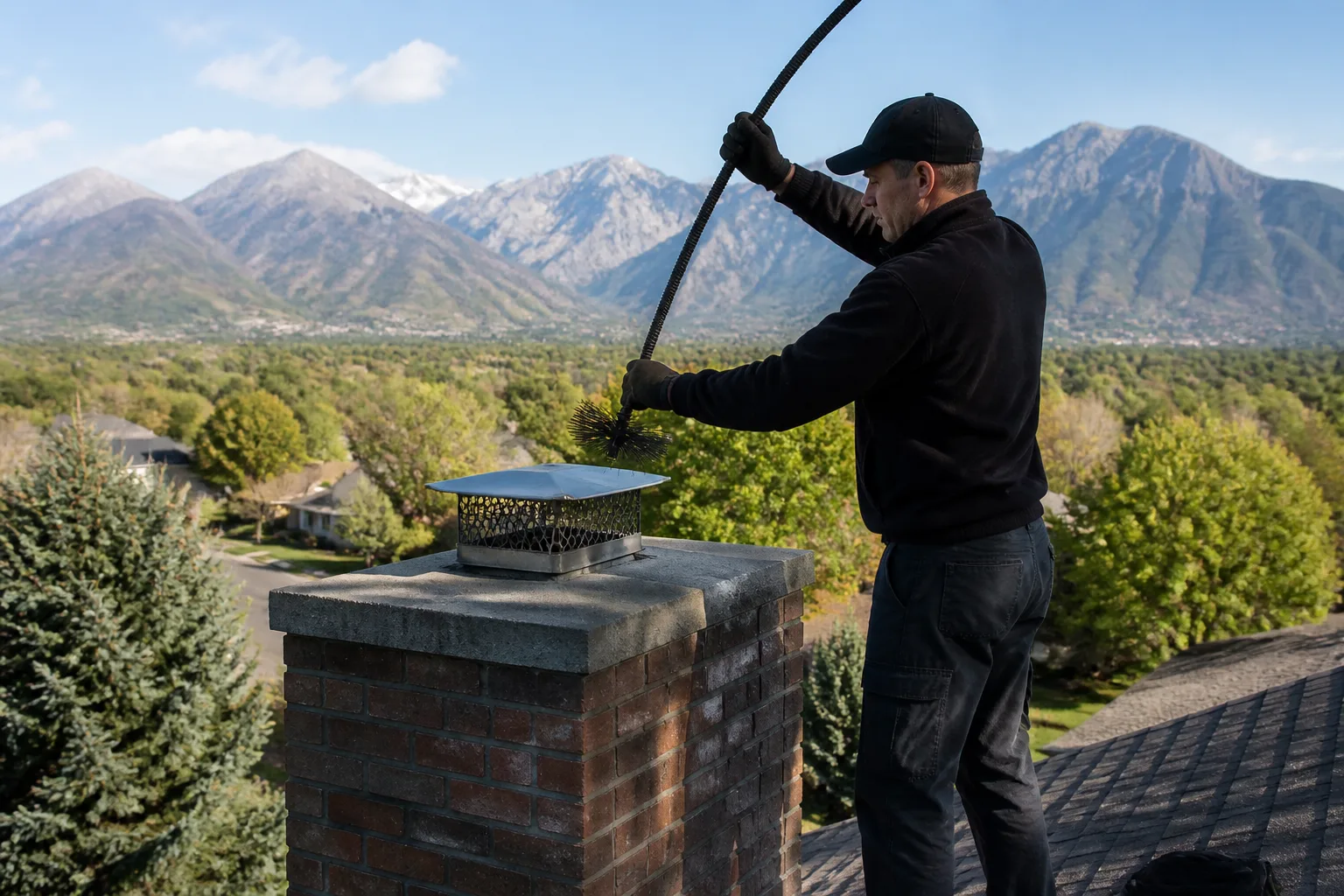
DuraFlex Chimney Sweep in Holladay: A Homeowner’s Guide
If a contractor recommends a DuraFlex liner without first putting a camera in your existing flue, they’ve skipped the step that determines whether you actually need it. We see this in Holladay often: a flue problem gets diagnosed from the rooftop with a flashlight, and the fix gets quoted before anyone has seen the inside of the chimney. This guide explains what a DuraFlex liner really is, when it’s the right call, and how to tell a properly specified job from a rushed one. If you’d rather skip the research and have someone look, call (855) 658-5257 and we’ll get a camera into your flue.
What Is a DuraFlex Chimney Liner, Exactly?
A DuraFlex liner is a flexible, stainless steel flue liner that comes pre-insulated and is designed to reline a deteriorated masonry chimney. It’s built to be pulled down through an existing flue, which means it can handle bends and offsets that a rigid stainless pipe simply can’t. It’s a relining system, not a repair patch, and it becomes the new flue surface the moment it’s installed and connected.
Here’s what that means in practical terms. The liner is a continuous length of corrugated stainless steel, wrapped in insulation that keeps the flue gases hot and protects the surrounding masonry from heat. It runs from the top of the chimney down to the appliance connection, and every joint along the way is sealed. The result is a flue that vents combustion gases the way the appliance was designed to vent them, rather than through cracked clay tiles and gaps in the mortar.
This matters in Holladay because the older housing stock here has clay tile flues that have often been through several decades of heating cycles. Clay tiles crack. Mortar joints between them crumble. When that happens, the flue is no longer a sealed path for smoke and gases. A DuraFlex liner gives that chimney a new, continuous interior surface without tearing down the masonry.
One thing worth stating plainly: a DuraFlex liner is one brand of flexible liner system. It’s a professional-grade product, and it’s not the only option. Whether it’s the correct specification for your chimney depends entirely on what the camera finds. Which brings us to the diagnostic step.
Related: chimney sweep.
When Does a Chimney Actually Need a DuraFlex Liner?
You need a DuraFlex liner when your existing clay tile flue is compromised enough that it can no longer safely contain combustion gases, and the damage is spread across enough of the flue that spot repair won’t fix it. The most common findings that lead to a reline are cracked or spalling tiles, missing mortar joints, gaps at offsets, or a flue that was never properly sized for the appliance in the first place.
We treat the camera inspection as the whole point. A properly done inspection shows you, on screen, what’s happening inside the flue: the cracks, the gaps, the tiles that have shifted. From that footage, the relining decision follows one of a few paths:
- Deterioration is widespread and the flue has offsets or bends: a flexible liner like DuraFlex is usually the right fit, because it can be pulled through the bends in one continuous length.
- The flue is straight and the tiles are still intact, but the interior surface is rough or lightly cracked: a cast-in-place resurfacing system like HeatShield may solve the problem without a full tear-out.
- The flue is straight, the damage is at a single location, and rigid pipe can be installed cleanly: a rigid stainless liner may be the more appropriate spec, and it’s often the better choice for a straight run.
- The flue is badly out of shape with major structural damage to the masonry itself: the masonry may need repair before any liner goes in, and a liner installed over failing structure just hides the problem.
The point is that the liner type should follow the inspection, not the other way around. A contractor who quotes DuraFlex before seeing the inside of your flue isn’t describing a specification, they’re describing a default.
Why Offset Flues Make DuraFlex the Practical Choice in Holladay
An offset flue is a chimney that doesn’t run straight up. At some point in its climb, the flue steps backward, forward, or sideways to clear a roofline, a wall, or another part of the house, and that step creates a bend in the flue path. Older homes in Holladay frequently have them, and they’re one of the main reasons a rigid liner won’t go in without major masonry work.
Rigid stainless pipe has to be assembled in sections and lowered straight down. Every bend in the flue requires a fitting, and every fitting requires space and access that many existing chimneys don’t offer. On a flue with two or three bends, a rigid installation can turn into a masonry project, which is exactly the kind of job most homeowners aren’t looking for and many sweep-only companies simply won’t take on.
DuraFlex handles this differently because it’s flexible. The liner is pulled through the existing flue from the top, curving through the offsets as it goes. That’s the specific capability advantage here: it lets us reline a chimney that a rigid system can’t navigate, without tearing into the masonry around it.
This isn’t a knock on rigid liners. A straight, clean flue with a straightforward path often does well with rigid pipe, and there are cases where it’s the better spec. The point is that the flue geometry has to match the liner type, and in older Holladay housing stock with stepped flues, flexible liners frequently win on practicality alone.
What Does a Proper DuraFlex Installation Involve?
A proper DuraFlex installation takes a full day for most chimneys, involves the roof, and follows a sequence that doesn’t leave room for shortcuts. Here’s the process as it should look, so you know what to expect and what questions to ask during the work:
- Inspection with a camera, documented. Before anything is ordered, the flue is inspected with a camera and the findings are photographed. You should see the footage.
- Sizing and specification. The liner is sized to the appliance, not to the flue. An oversized liner vents poorly; an undersized one can’t handle the appliance’s output. The correct diameter matters as much as the material.
- Cleaning the flue. The flue is swept before the liner goes in. You can’t reline a dirty flue, and you don’t want to trap soot behind the new liner.
- Test-fitting and pulling the liner. The flexible liner is pulled down through the flue and into position at the appliance connection.
- Top termination and cap. The liner is connected and terminated at the crown with a proper cap. This is the part that keeps water and animals out, and it’s where a lot of liner jobs get finished sloppily.
- Appliance connection and final check. The bottom end is connected to the appliance, the joints are sealed, and the whole system is checked before it’s signed off.
Questions worth asking during the work: Is the liner insulated? What diameter was specified, and why? How is the top terminated, and is the cap included? Is the bottom connection sealed, and can you show me the final camera pass? A crew that can answer those without hesitation is a crew that’s done this before. In our experience, the install itself is rarely where jobs go wrong; the specification and the top termination are where they do.
How Long Does a DuraFlex Liner Last, and What Does the Warranty Actually Cover?
A properly installed DuraFlex liner is a long-term component, designed to serve for decades rather than a few seasons, but how long it actually lasts comes down to three things: whether it was sized and installed correctly, whether the appliance is burned correctly, and whether the top of the chimney stays watertight. Get those right and the liner is a one-time fix for the flue. Get them wrong and the best product on the market won’t save you.
Maintenance is more modest than most homeowners expect. The liner itself doesn’t need any special treatment; what it needs is the same annual sweep and inspection any chimney needs, so the flue stays clear and any developing issue at the top or the connection gets caught early. Water is the enemy of every liner, which is why the cap and crown work matters as much as the liner itself.
On warranty terms, read the fine print and ask specifically what’s excluded. Liner warranties are typically written around the product and the installation, and the exclusions usually come down to things like water intrusion, damage from a chimney fire, and installation issues at the connections. The practical advice: keep the inspection documentation, keep the cap and crown in good shape, and don’t assume the warranty covers problems caused by something the warranty didn’t cause. If a contractor waves off those details, that’s worth a second question.
For material selection, working with professional-grade brands matters more than the marketing suggests. We work with DuraFlex for flexible relining, HeatShield for cast-in-place flue resurfacing, and products from Olympia Chimney and Gelco where the job calls for them. The right spec depends on the flue, which is why the inspection comes first.
When to Call a Pro
Call a pro when you smell smoke in the house with the damper closed, when the fire doesn’t draw well, when you see cracked or missing tiles from the top, or when a home inspector has flagged the flue. Those are all signs the flue needs a proper camera inspection before anyone recommends a liner. And if a contractor has quoted a DuraFlex liner without showing you the inside of your flue, that’s a reason to get a second look.
If it’s maintenance you’re after, a routine chimney sweep plus an inspection is the starting point. If a fireplace is part of the problem, fireplace repair is often the right first call, and for structural issues with the chimney itself, chimney repair covers the masonry, cap, and crown work that keeps water out.
The Bottom Line
A DuraFlex liner is the right solution for a specific problem: a deteriorated clay flue, often in an older masonry chimney, frequently with offsets that make rigid liner impractical, and usually confirmed by a camera inspection before anything is ordered. It’s not a default answer, and it’s not the only option; rigid liner and cast-in-place resurfacing are both legitimate specifications in the right conditions. The inspection decides, and you should see the footage.
If you’re in Holladay and need help, Chimney Sweep Holladay offers free estimates. We handle the whole chimney, from the firebox to the cap, so a liner recommendation comes with a plan for the top termination, the crown, and everything that keeps the flue dry. Call (855) 658-5257. We answer 24/7. Fast dispatch from 7am to 7pm, Sunday through Friday.
Frequently Asked Questions
A sweep is enough only when the flue is intact. If the camera shows cracked tiles, missing mortar joints, or gaps at an offset, sweeping won’t fix that; the flue can’t safely contain combustion gases, and a liner is the repair. If the tiles are sound and the issue is just creosote, a sweep is exactly what’s needed. Call (855) 658-5257 for an inspection with camera footage you can see, and the answer follows from what’s actually in your flue.
We don’t quote liner work from a phone call, because the price depends on flue length, diameter, insulation, the number of offsets, and the condition of the crown and cap at the top. The written estimate is where the price is set, and the estimate is free. Call (855) 658-5257 and we’ll get the camera into the flue first, then give you a written number.
Yes, that’s the specific advantage of a flexible liner. Offsets and multiple bends are exactly where rigid pipe struggles and a flexible liner works, because it can be pulled through the existing flue as a continuous length. It also means a flexible liner can reline chimneys that would otherwise need masonry work to accept rigid pipe. Call (855) 658-5257 and we’ll inspect the flue and confirm the right spec.
Once a year is the standard baseline, and more often if you burn heavily or burn wood that produces a lot of creosote. The liner doesn’t change the maintenance schedule; it just means the flue is a clean, sealed surface that’s easier to maintain. The annual sweep and inspection is also how you catch problems at the cap and crown before they become water damage. Call (855) 658-5257 to book a sweep.
Written by the team at Chimney Sweep Holladay.
Need Chimney Cleaning Help?
Call Chimney Sweep Holladay - the local pro we connect you with is licensed and insured, here with fast help in Holladay.
(855) 658-5257